
Back to case studiesTrocknerheld
Trocknerheld fixes water damage across Germany, with 150+ staff and 17,000+ cases a year. On its Berlin line, 35% of calls went unanswered. The team was busy, already on another call, or the office was closed. Lena, an AI receptionist built with Qualiflow, now answers those calls. She works out what each caller needs, handles admin alone, and passes new customers to sales. For water damage, she collects the full picture and creates a ticket. After a 10-day pilot, Trocknerheld put Lena on its main line and rolled her out to all 8 of its regions. These are Baden-Württemberg, Bayern, Berlin, Brandenburg, Hessen, Nord, Nordrhein-Westfalen and Ost.
The challenge
The phone never stopped ringing. About half of all calls were water damage. The rest were new customers, tenants moving an appointment, and general questions. All of them came into the same line, and the team could not tell them apart before picking up. On the Berlin line, 35% of calls went unanswered, even in working hours. A quarter came in the evening or at the weekend, when nobody was in. For a water damage company, a missed call is often a lost job. A caller with an active leak rarely waits for a callback.
The solution
There is no fixed script. Lena works out each call on her own and asks for what that case needs. A changed appointment needs a date. A water damage report needs the full picture. New customers who want a contract go straight to a salesperson. Everything else she handles alone, and each water damage report becomes a ticket in Trocknerheld's system. In the 10-day pilot, Lena took about 260 calls on the Berlin line that the team could not answer. Almost 200 of them reached their goal, a 76% success rate. Most of the rest hung up within a few seconds, before saying anything. Callers who stayed on talked for about 1.5 minutes. If a caller shares details but the call does not reach its goal, the team still gets them by email and calls back. The calls fell into four groups.
- Water damage
- About half of all calls. Each one becomes a ticket the team can act on straight away.
- New customers
- Property managers and private customers who want to sign a contract. Lena forwards them to a salesperson.
- Appointments
- Moving or cancelling a visit. Lena takes the details, so nobody on the team has to pick up.
- General questions
- Answered during the call.
What the team finds in a water damage ticket
- Which rooms are affected, and how many
- How serious the damage is
- Whether water is still leaking
- Whether it is close to electricity
- Whether neighbours or the whole building are affected
- Whether a property management company already knows
- When the team can call back to book the job
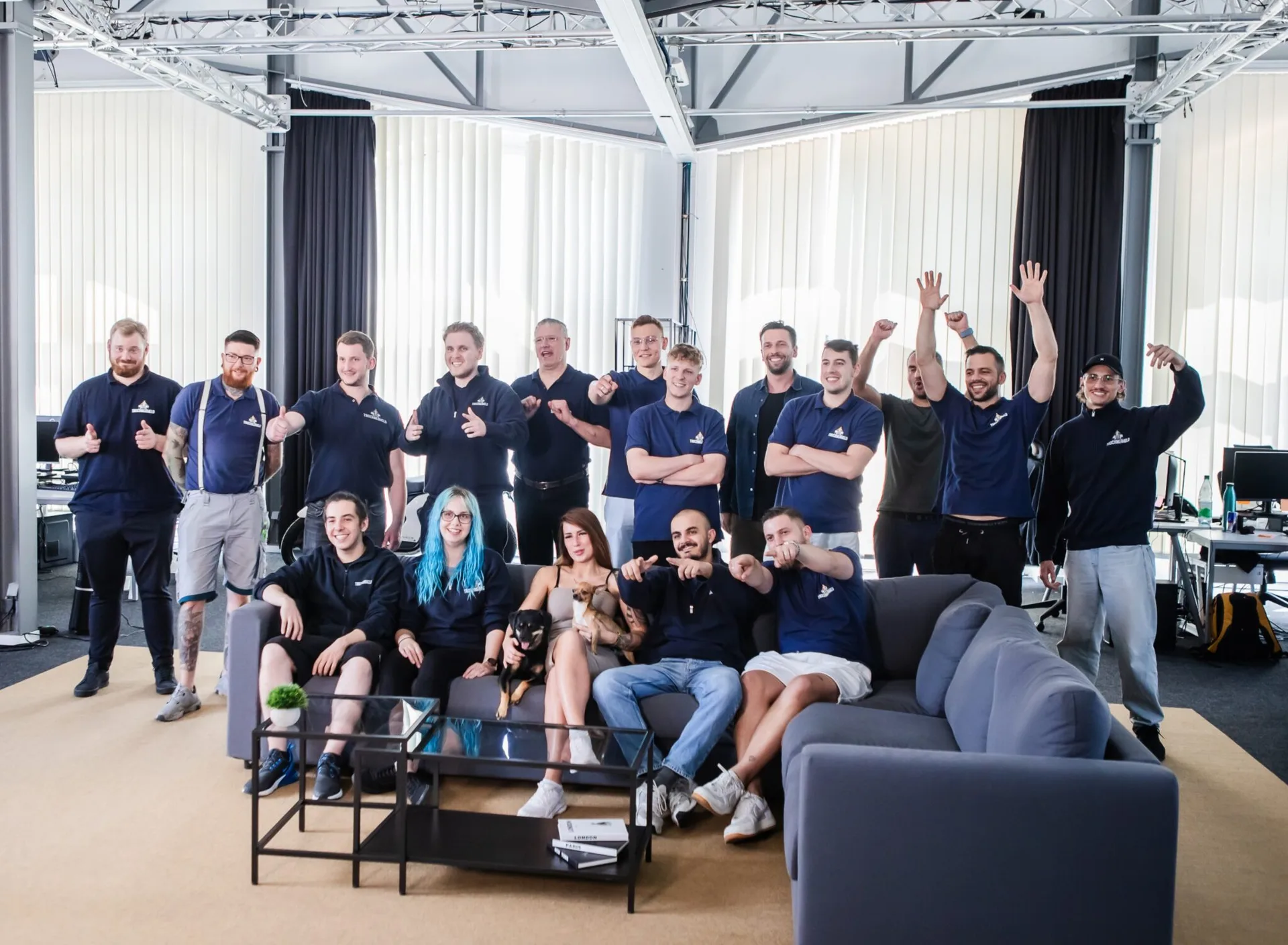
“Our phone never stopped ringing, and we still missed about a third of the calls. Now Lena answers every one. When we start in the morning, the water damage tickets are already waiting.”
 Simon Buslovich, Co-Founder & CTO
“Lena asks the questions that matter. Is it still leaking, is it near electricity, is the whole building affected. Before we even call back, we have the full picture.”
 Nadia Weinstock, Co-Founder & COO
Results
9,000+
calls a year the team could not take, now answered
At the pilot's pace, on the Berlin line alone. Before, 35% of calls there went unanswered.
1 in 2
calls is water damage
Each job starts with an on-site assessment from €255. Lena turns every report into a ready ticket.
1,200+
calls in the first weeks
Across all 8 lines, with Lena answering first.
8
regions where Lena answers
It started as a 10-day pilot on one line in Berlin.
- Every call answered. Before, 35% of calls in Berlin were missed.
- About 260 calls in the 10-day pilot that the team could not answer, and 76% reached their goal
- Callers who stayed on talked for about 1.5 minutes and shared the full details
- A quarter of calls answered in the evening and at weekends
- Every water damage report ready as a ticket when the team starts work
- New customers forwarded to sales. Admin and questions handled by Lena alone.
- Moved to the main line and rolled out to all 8 regions after the pilot
- 1,200+ calls across the 8 lines in the first weeks after the pilot